Ha Long Bay · Things to do
Ha Long Bay Location: Where It Is & How to Visit
By Wander in Vietnam editorial team · Hanoi, Vietnam
Ha Long Bay sits in northeastern Vietnam's Quang Ninh province, 160 kilometres northeast of Hanoi. The UNESCO World Heritage limestone karst landscape spans approximately 1,553 square kilometres, attracting over 1 million visitors annually. Understanding its exact location and geography helps you choose the right entry point, accommodation type, and tour operator—critical decisions before booking.
Where Exactly Is Ha Long Bay in Vietnam?
Ha Long Bay occupies Quang Ninh province in northeastern Vietnam, bounded by the Red River Delta to the south and the Gulf of Tonkin to the east. The bay's main hub is Hạ Long city, situated on the western shore. Cát Bà Island, Vietnam's largest island, anchors the southern section and offers a quieter alternative base. From Hanoi, the journey northeast takes 2.5–3.5 hours by road depending on traffic and road conditions.
🗺️ Plan your route: Vietnam itinerary
How Do You Reach Ha Long Bay from Hanoi?
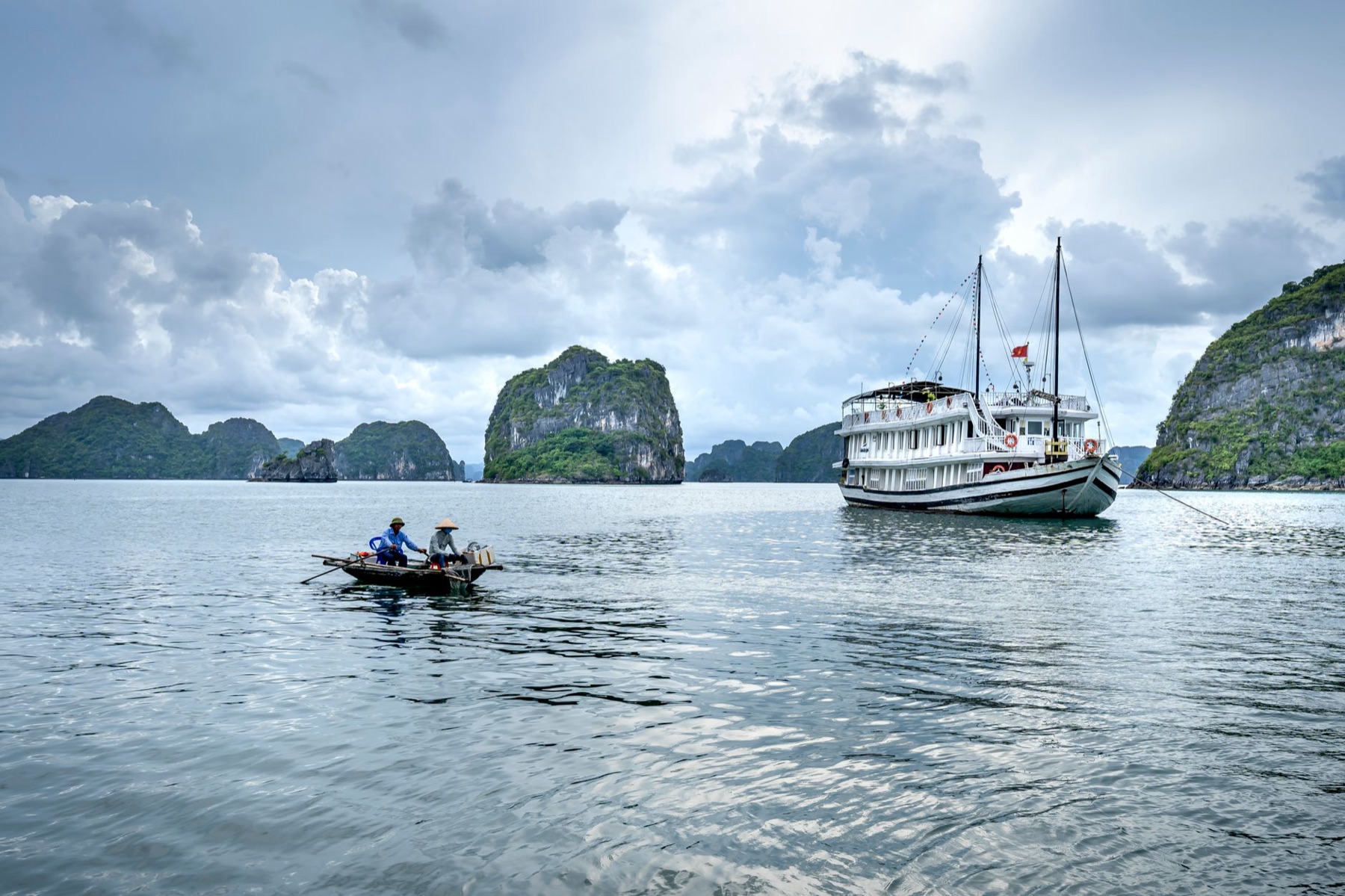
Three main routes connect Hanoi to Ha Long Bay. The most common is driving via National Highway 5 and Provincial Route 18, taking 2.5–3 hours in normal conditions. Group tours and private car hire depart from Hanoi's central districts, collecting passengers before heading northeast. Buses operate from Hanoi's Gia Lâm and Bến Xe Mỹ Đình stations, costing around 150,000–250,000 VND ($6–10 USD) for standard seats. Speedboat services from Cát Bá city on Cát Bà Island offer an alternative 45-minute crossing to the bay itself.
Which Base Should You Choose—Hạ Long City or Cát Bà Island?
| Base | Best for | Travel time to bay | Vibe | Cruise departure |
|---|---|---|---|---|
| Hạ Long city | Budget cruises, quick access, families | 15–30 min | Busy, commercial | Most operators |
| Cát Bà Island | Hiking, quiet stay, adventure | 45 min by speedboat | Laid-back, bohemian | Boutique tours |
Hạ Long city is the bay's commercial heart. Hotels cluster along Hạ Long Bay waterfront (around 1–3 million VND/$40–120 USD per night for mid-range options). Cruise operators, restaurants and tour desks line the main promenade. Overnight and day cruises depart from here; you can reach the bay within 15–30 minutes by boat.
Cát Bà Island suits travellers seeking quiet. A 45-minute speedboat connects the island's town centre to Hạ Long city's cruise terminals. Hiking, kayaking and homestays dominate. You'll pay slightly less for accommodation (800,000–2 million VND/$32–80 USD mid-range) but spend longer reaching cruise departure points.
🎟️ Compare tours & tickets for this place
What Are the Main Entry Points for Cruises and Day Tours?
Hạ Long city port (western shore): The largest departure hub. Most 3–well-made cruise operators, budget speedboats and day-trip houseboats leave here. Hotels and agencies fill the waterfront. Easy vehicle access; overnight stays before early departures are standard.
Bái Chay fishing village: A quieter northern entry 15 kilometres west. Some boutique and eco-tour operators launch from here, avoiding central-port congestion. Fewer facilities; fewer cruise choices.
Cát Bá Island town: Southern gateway for independent travellers. Local speedboat operators offer flexible, small-group tours. Limited onboard amenities compared to commercial cruises. Useful if you're already staying on the island.
Cát Bà National Park headquarters: Adventure-focused option. Trekking, kayaking and island camping are managed directly; day-trip combinations are common for active visitors.
How to Choose the Right Cruise Type for Your Budget and Style?
Budget options (1–2 million VND/$40–80 USD per person, overnight): Shared cabins, fixed itineraries, large groups (50–100 people). Shared bathrooms common. Sunset watching and cave visits included. Food is basic but adequate. Depart from Hạ Long city port; booking through agencies in Hanoi cuts queues.
Mid-range cruises (2.5–4 million VND/$100–160 USD per person, overnight): Private or dual cabins, 20–40 passengers, better meals, included kayaking or swimming. Air-conditioned cabins standard. English-speaking guides common. Some operator variation in food quality and itinerary depth; read recent reviews on independent sites.
Luxury cruises (4 million VND+/$160+ USD per person, overnight): Small groups (under 20), private suites, multi-course meals, shore excursions led by naturalists or historians. Gourmet dining, premium bedding. Book direct or via upscale Hanoi travel concierge services. Advance booking (4–8 weeks) recommended.
Day trips (600,000–1.5 million VND/$24–60 USD): Return to Hạ Long or Cát Bà by evening. Crowded boats, fixed schedules, cave + sunrise views, no overnight accommodation needed. Ideal if you're time-pressed or budget-conscious.
📸 Book an ao dai photoshoot in Hanoi or Saigon (Cáo Studio)
What to Check Before You Book a Cruise
- Passenger capacity: Smaller = better views, less noise, easier for photography. Confirm exact cabin-mate arrangement if sharing.
- Itinerary detail: Check which caves, islands and activities are included. Some cruises skip Sung Sot Cave or kayaking entirely; others add them.
- Meal quality: Read recent traveller reviews about food variety and hygiene, not just star ratings.
- Guide language: Request English-speaking guide if you need interpretation; many overnight cruises include naturalists.
- Hidden costs: Confirm whether national park entrance fees (typically 100,000–200,000 VND/$4–8 USD), equipment rentals or tips are included or extra.
- Departure timing: Early-morning departs (6–7 a.m.) mean you see sunrise on the water; afternoon starts miss this but suit slow risers.
- Cancellation policy: Check refund terms if weather worsens or you fall ill; many operate non-refundable unless typhoon alerts close the bay.
- Company reputation: Verify operator licence with Quang Ninh Tourism Department; avoid unlicensed "freelance" boat captains offering street deals.
Nearby Towns Worth Combining with Ha Long Bay
Cát Bà city: 45 minutes by speedboat from Hạ Long Bay proper. Home to Cát Bà National Park (hiking, cave systems), quieter than Hạ Long city, and a jumping-off point for rock-climbing tours and kayak expeditions.
Hạ Long city: Your main port hub; walk the waterfront, eat fresh seafood, book tours same-day if needed, though advance booking is safer during peak season (May–September).
Quảng Yên province towns: Inland limestone landscapes, temple visits, coal-mining heritage tourism (niche). Rarely visited; minimal English; useful if extending a 5+ day north Vietnam itinerary.
🗺️ Explore nearby: Ninh Binh guide | 🗺️ Compare nearby: Hanoi guide
Practical Tips for Ha Long Bay Travel
- Best seasons: October–April (cool, calm seas, clear skies). May–September is hot, humid, typhoon risk higher (occasional bay closures).
- eSIM & connectivity: Grab an eSIM before arrival to stay connected booking tours and sharing real-time updates. See our Vietnam eSIM guide for options.
- Visa: Most visitors need an e-visa or visa exemption. Check Vietnam e-visa requirements well in advance.
- Currency: Bring VND cash (around 1–2 million VND per person per day) or a card that works at ATMs in Hạ Long city.
- Seasickness: Waves are mild in the bay, but take medication if you're sensitive. Ginger sweets, wristbands and prescription patches are available in Hanoi pharmacies.
Gifts & Keepsakes from Your Ha Long Bay Trip
After your cruise, personalized gifts capture the memory—ideal for loved ones back home or for yourself.
Limestone landscape art prints (map, watercolour, star-map overlays showing bay coordinates) work for travellers who want a reminder of the karst geography. These are available as framed prints or canvas and ship easily in padded tubes. Around 300,000–800,000 VND ($12–32 USD) unframed; 800,000–2 million VND ($32–80 USD) framed.
📸 Personalize your memory: ao dai photoshoot in Hanoi or Saigon (Cáo Studio)
Engraved keepsake boxes or wooden plaques with your cruise date, bay name and coordinates appeal to sentimental travellers. Sourced locally in Hạ Long or Hanoi, they cost 400,000–1.5 million VND ($16–60 USD) depending on wood type and detail. These resist shipping damage and feel substantial.
Travel journals or watercolour sketch pads (blank, pre-printed with bay maps, or with prompts) let you document impressions immediately. Cost 100,000–400,000 VND ($4–16 USD); lightweight, perfect for luggage or international shipping.
Locally-made spices, dry seafood or honey from Quang Ninh markets (Ha Long Bay fish sauce, dried squid, acacia honey) make affordable, edible souvenirs. Around 150,000–500,000 VND ($6–20 USD) per item; lightweight for posting home.
Custom photo books or framed canvas prints of your own cruise photos (mounted and printed by local photography services in Hanoi or Hạ Long) cost 800,000–3 million VND ($32–120 USD) depending on size and binding. Ship internationally in protective boxes; allow 2–4 weeks for production and delivery.
Check our collections for gifts matched to travel themes and interests. Browse keepsake & memory gifts for framed prints, journals and personalised items suitable for Ha Long Bay recall.
🎟️ Compare tours & tickets for this place
---
Additional Resources
- Ha Long Bay full travel guide
- Things to do in Ha Long Bay
- Hanoi city guide (your likely departure point)
- Hoa Lang Thang—flower delivery in Hanoi (send flowers to your Hanoi hotel or host before arrival)
---
FAQ
How far is Ha Long Bay from Hanoi?
Ha Long Bay is 160 kilometres northeast of Hanoi, accessible in 2.5–3.5 hours by car or bus via National Highway 5. Group tours and private hire depart daily from central Hanoi hotels and stations, collecting passengers before the full-day drive.
Is it better to stay in Hạ Long city or Cát Bà Island?
Hạ Long city offers more cruise operators, restaurants and amenities, plus quicker bay access (15–30 min by boat). Cát Bà Island suits those seeking quiet and hiking but adds 45 minutes to cruise departures. Both have mid-range hotels around 1–2 million VND ($40–80 USD) per night.
What's the cheapest way to visit Ha Long Bay?
Budget overnight cruises (1–2 million VND/$40–80 USD per person) depart Hạ Long city daily. Alternatively, take a bus from Hanoi (150,000–250,000 VND/$6–10 USD), stay in a guesthouse (600,000–1 million VND/$24–40 USD), and book a day-tour speedboat (600,000–1 million VND/$24–40 USD) same-day.
When is the best time to visit Ha Long Bay?
October–April offers cool weather, calm seas and clear skies. May–September is hot and humid with typhoon risk and occasional bay closures. Peak season (November–March) means crowded cruises; book 4–8 weeks ahead for popular operators.
Do I need a visa to visit Ha Long Bay?
You need a valid Vietnamese visa or visa exemption (check your nationality at Vietnam e-visa guide). Most visitors obtain an e-visa online (25–50 USD) before travel. Get an eSIM for connectivity while applying and booking tours remotely.
What should I pack for a Ha Long Bay overnight cruise?
Bring light layers (cabin air-conditioning is cold), swimwear, sunscreen, seasickness medication if prone, a small towel and toiletries (some cruises don't supply these). Phones and cameras lose battery fast; a power bank is essential. Wear shoes with grip for cave walks.
FAQ
How far is Ha Long Bay from Hanoi?
Ha Long Bay is 160 kilometres northeast of Hanoi, accessible in 2.5–3.5 hours by car or bus via National Highway 5. Group tours and private hire depart daily from central Hanoi hotels and stations, collecting passengers before the full-day drive.
Is it better to stay in Hạ Long city or Cát Bà Island?
Hạ Long city offers more cruise operators, restaurants and amenities, plus quicker bay access (15–30 min by boat). Cát Bà Island suits those seeking quiet and hiking but adds 45 minutes to cruise departures. Both have mid-range hotels around 1–2 million VND ($40–80 USD) per night.
What's the cheapest way to visit Ha Long Bay?
Budget overnight cruises (1–2 million VND/$40–80 USD per person) depart Hạ Long city daily. Alternatively, take a bus from Hanoi (150,000–250,000 VND/$6–10 USD), stay in a guesthouse (600,000–1 million VND/$24–40 USD), and book a day-tour speedboat (600,000–1 million VND/$24–40 USD) same-day.
When is the best time to visit Ha Long Bay?
October–April offers cool weather, calm seas and clear skies. May–September is hot and humid with typhoon risk and occasional bay closures. Peak season (November–March) means crowded cruises; book 4–8 weeks ahead for popular operators.
Do I need a visa to visit Ha Long Bay?
You need a valid Vietnamese visa or visa exemption (check your nationality at [Vietnam e-visa guide](/vietnam/visa)). Most visitors obtain an e-visa online (25–50 USD) before travel. Get an eSIM for connectivity while applying and booking tours remotely.
What should I pack for a Ha Long Bay overnight cruise?
Bring light layers (cabin air-conditioning is cold), swimwear, sunscreen, seasickness medication if prone, a small towel and toiletries (some cruises don't supply these). Phones and cameras lose battery fast; a power bank is essential. Wear shoes with grip for cave walks.
More: Ha Long Bay travel guide · Things to do in Ha Long Bay