Hanoi · Itinerary
3 Day Hanoi Itinerary: Old Quarter, Temples & Local Eats
By Wander in Vietnam editorial team · Hanoi, Vietnam
A 3-day Hanoi itinerary balances the hectic Old Quarter's narrow streets and markets, temples around Hoan Kiem Lake, and local food tours through Ba Dinh and Dong Da districts. Most visitors need day one for orientation and markets, day two for temples and lakes, and day three for craft villages or day trips. This timeframe skips the rush, lets you eat properly, and avoids burnout—crucial in a city where motorbike traffic moves at its own logic.
What should I see in the Hanoi Old Quarter on day one?
Dedicate morning arrival to Hoan Kiem Lake (Tay Ho) for orientation. Walk the 1.4 km perimeter loop—locals here move slowly, unlike the Old Quarter's chaos. The lake's northern shore near Quan Thanh Ward feels quieter; southern side (near Dong Xuan Market) gets crowded by midday. Grab a coffee at a street stall (around 20,000–40,000 VND / $1–2 USD) and watch water puppets reflected in the lake.
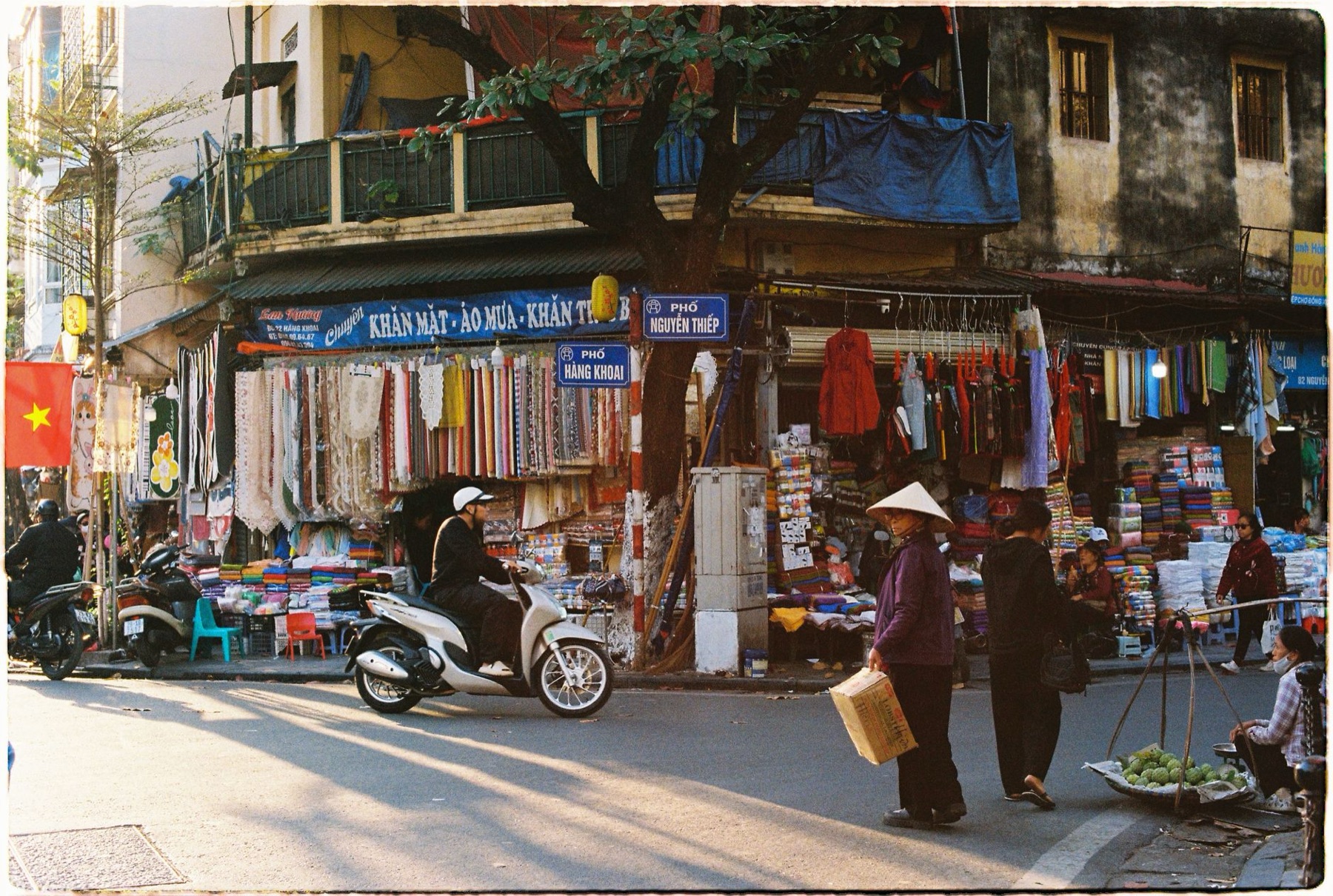
By 10:30 a.m., dive into the 36 Streets Old Quarter (Hoan Kiem District). Yes, 36 literally named streets: Silver Street (Hang Bac), Silk Street (Hang Lua), Tin Street (Hang Thiec). These names date to the 13th century—each street hosted one trade. Tourists crowd certain blocks after 11 a.m.; arrive early to see locals haggling with shopkeepers over bolt fabric or spice bags.
Real timing: Three hours is enough to walk north–south through the Old Quarter, duck into alleyway cafes, and buy cheap souvenirs without exhaustion. Avoid Hang Dao and Hang Gai streets between 2–4 p.m.—tour groups move in waves. Instead, slip down Hang Chinh or Hang Manh (less foot traffic, same energy).
Lunch: Find a plastic-stool com tam (broken-rice) stand near Hang Be Market. Expect 30,000–50,000 VND ($1.50–2.50) for rice, grilled fish, and pickles. These aren't tourist traps—locals eat here daily.
Afternoon: Visit Dong Xuan Market (Vietnam's largest covered market). Arrive after 3 p.m. when tour groups leave. Floors 1–2 sell fabrics, clothes, cheap electronics. Floor 3 is housewares and random goods. Don't buy anything you can't carry; haggling is expected on bulk items (textiles, tea), not on packaged goods.
Skip: Hoan Kiem Lake's Turtle Tower—it's a shrine from land, and you'll see it fine from the shorepath. The "restored" tower interior is closed to tourists and overrated in photos.
Where are the best temples and pagodas for day two?
Day two focuses on Buddhist and historic sites north of the Old Quarter, in Ba Dinh and around the Red River's west bank. This avoids day-one's market chaos and lets you walk slower.
Must-see temples:
- Tran Quoc Pagoda (Tay Ho District, Thanh Cong Ward): Hanoi's oldest pagoda (6th century). Sits on a peninsula jutting into the Red River. Arrive by 7–8 a.m. before tourists flood in; monks chant at dawn and it's genuinely peaceful. Admission free. Walk the pagoda's circular path clockwise (Buddhist tradition), spin prayer wheels, and sit on the stone platform facing the water. Allow 90 minutes. Cost: 0 VND (but bring a small donation if you light incense).
- Ho Tay (West Lake): Larger than Hoan Kiem, far less crowded. Rent a bicycle from a stall near Tran Quoc (around 50,000 VND / $2.50 per day) and circle the lake's north shore. Stop at Quan Thanh Temple (Ba Dinh District) mid-ride. The temple sits near the old city walls; its interior is dark and cool, a relief from Hanoi's humidity.
- Temple of Literature (Quoc Tu Giam, Ba Dinh District): Vietnam's first university (1070). Peaceful courtyards, scholar steles, and minimal crowds if you arrive by 8:30 a.m. Admission around 30,000 VND ($1.50). Hanoi families bring kids here; you'll see school groups but fewer foreign tourists than at Tran Quoc. Allow 2 hours.
Honest take: The Mausoleum of Ho Chi Minh (also Ba Dinh District) is heavily guarded and requires respectful clothing (closed shoulders, knees). If you want to enter, arrive by 8 a.m.; it closes 11 a.m.–1 p.m. daily and Mondays/Fridays entirely. Many visitors skip it—no photos allowed, and the wait can be 30+ minutes. It's not overrated, but plan it carefully or skip without regret.
Lunch near West Lake: Small seafood stalls line Tran Quoc's approach. A grilled fish and rice plate costs 60,000–80,000 VND ($3–4). Fish is fresh; locals eat here.
Afternoon: Visit a craft village within 20 km of central Hanoi. Bat Trang (Gia Lam District, east of the Red River) specializes in ceramics; factories line the main road and you can watch potters at wheels. Or try Dong Ho (Bac Ninh Province, 40 km north) for folk woodblock prints—small family workshops still hand-carve and print on rice paper. Both are 1.5–2-hour motorbike rides from the Old Quarter (negotiate a round-trip with a driver for around 300,000–400,000 VND / $15–20 USD). Avoid over-polished souvenir shops; ask a local cafe owner to point you to a family workshop.
How much should I budget per day, and where are the real food spots?
Daily budget reality for 3 days:
| Item | Cost (VND) | USD | Notes |
|---|---|---|---|
| Street breakfast (pho, banh mi) | 25,000–40,000 | $1.25–2 | Local vendors, no English menu |
| Lunch (com tam, bun) | 40,000–60,000 | $2–3 | Plastic stools, no frills |
| Dinner (restaurant) | 80,000–150,000 | $4–7.50 | Mid-range; avoid tourist-marked streets |
| Coffee/drinks | 20,000–50,000 | $1–2.50 | Street stalls vs. cafes |
| Museum/temple entries | 0–30,000 | $0–1.50 | Most are free or cheap |
| Transport (taxis/Grab) | 30,000–80,000/trip | $1.50–4 | Uber-style Grab cheaper than metered taxis |
| Total per day | ~250,000–400,000 | ~$12–20 | Budget traveler; excludes shopping |
Street food checklist—eat where locals do:
- Pho (beef or chicken broth with rice noodles): 35,000–50,000 VND ($1.75–2.50). Eat breakfast between 6–8 a.m. at standing-room stalls. Pho 69 near Hoan Kiem Lake (Hang Dieu street) has no sign, just a doorway—locals queue. Go early or miss it.
- Banh mi (Vietnamese sandwich): 25,000–35,000 VND ($1.25–1.75). Street carts on Hang Be and Nguyen Huu Huan streets. Fills you for half a day.
- Egg coffee (ca phe trung): 35,000–50,000 VND ($1.75–2.50). Giang Café (Hang Gai Street, Old Quarter) invented it. Tourist trap now, but if you're in the area, it's an experience. Go early; lines form by 10 a.m.
- Cha ca (turmeric fish and noodles, Hanoi specialty): 50,000–80,000 VND ($2.50–4). Cha Ca La Vong Street (west of Hoan Kiem) is entirely dedicated to this dish. Every shop is the same; pick one with the most locals. Claustrophobic, loud, unmissable.
- Bun cha (grilled pork, noodles, dipping sauce): 40,000–70,000 VND ($2–3.50). Sit on plastic stools outdoors, watch the grill. Bun Cha Hanoi near Duong Thanh Street.
- Corn pudding (sua chua): 15,000–25,000 VND ($0.75–1.25). Street carts, especially evenings on the lake's south shore.
Skip expensive restaurant rows: Avoid Ta Hien Street (Old Quarter's backpacker strip)—prices triple, quality doesn't. Same food costs 2–3x more 50 meters south on side alleys.
🗺️ Plan your route: Vietnam itinerary
What's the best use of day three—stay or day trip?
You have three honest options:
Option A: Ninh Binh (cave hikes & history), 2 hours south Take a morning minibus (around 150,000 VND / $7.50 one-way, 2–3 hours) from Hanoi's Luong Yen station south to Ninh Binh. Rent a bicycle or join a half-day boat tour through Tam Coc's limestone karsts. Eat local seafood. Return evening. Best if you want scenery but won't skip an afternoon. Read our Ninh Binh guide for specifics.
Option B: Ha Long Bay (UNESCO limestone), 3+ hours north Overnight cruises exist, but day trips are rushed. Book a 3-day cruise if you extend to 4+ days in Vietnam. Check the Ha Long guide for boat operators.
Option C: Stay in Hanoi—craft workshops, markets, neighborhoods Spend day three in Dong Da and Cau Giay districts (less touristy). Visit Silk Street's quieter western alleys. Take a slow breakfast, haggle at Cho Hang market (everyday vendors, not souvenir shops). Book an ao dai photoshoot in Hanoi (Cáo Studio) if you want professional photos in traditional dress (allows 2–3 hours, includes makeup). Walk to Hoa Lo Prison Museum (dark history; free with a 10,000 VND donation). Eat dinner at a family-run restaurant in Nhan Chinh Ward (zero English menus, real prices). This is actually the best option if you're not chasing logistics.
Honest advice: Most travelers extend to 4 days to do a 1-night Ninh Binh trip without stress. Three days in Hanoi alone is tight but doable if you skip day trips and embrace the city's depth instead.
What mistakes do most visitors make—and how to avoid them?
Scams and friction points we've actually seen:
- Cyclo (three-wheel taxi) rides from the Old Quarter. Drivers quote in USD, not VND, and will say "50" meaning $50, not 50,000 VND. Clarify currency upfront. Grab (app-based, metered) is safer; costs 30,000–60,000 VND ($1.50–3) for similar trips.
- "Official" tour guides approaching you at Hoan Kiem. Many are unlicensed and will upsell add-ons or take commissions from overpriced restaurants. Book tours directly through a hostel or hotel, or skip tours entirely (temples are self-guided).
- Overpriced souvenir stalls near Dong Xuan Market's main entrance. Walk 100 meters into side alleys; same goods cost 30–50% less. Haggling is normal here.
- Fake "silk" and "hand-woven" fabrics on Hang Lua. If the price is under 50,000 VND per meter, it's synthetic. Real silk from a weaver's loom costs 200,000+ VND ($10+). Ask for sample swatches to compare.
- Motorbike rental without a helmet or insurance. Police stop foreigners; fines are 200,000–500,000 VND ($10–25). Helmets are law. Reputable rental shops near the Old Quarter provide them (and collision waivers). Ask before signing.
- Eating at stalls with no turnover. If pots aren't simmering and locals aren't sitting nearby, skip it. Food poisoning is rare but happens to unprepared stomachs. Start with light broths and rice, not raw salads or sketchy meat.
What to check before you book:
- Motorbike taxis (Grab): Confirm destination in the app before accepting; drivers can't argue about direction.
- Minibus tickets: Buy at the station, not from street touts. Ask the hostel to book if you're unsure.
- Temple visits: Check if you need long pants/covered shoulders. Temple websites list dress codes (though most aren't strict).
- Weather: Hanoi is humid year-round. Bring quick-dry clothes. Monsoon (May–August) means afternoon rain; plan indoor activities then.
- Getting around: Download the Grab app (Southeast Asia's Uber). Google Maps works but can be outdated for small alleys. Offline maps or asking locals is sometimes faster.
📸 Book an ao dai photoshoot in Hanoi or Saigon (Cáo Studio)
Should I extend beyond three days—or move on?
If you're interested in Vietnam's full picture, a 3-day Hanoi baseline leaves room for nearby regions. Plan a longer Vietnam itinerary to include Sapa (hill tribes, rice terraces, 8–10 hours north by train or bus), Hoi An (tailor capital, old town, 14 hours south), or Ho Chi Minh City (energy, war history, 2 flights + layover to reach).
For a pure Hanoi deep-dive, stay 4–5 days:
- Day 4: Cycle to Thanh Phong Ward's suburban neighborhoods. Eat banh hoai (Hoi An style, but a Hanoi variation) at small shops. Visit a non-touristy cafe near the Red River's western bend.
- Day 5: Sunrise at a nearby pagoda, slow breakfast, souvenir refinement, evening flight or train.
Honest truth: Most visitors are satisfied leaving Hanoi after three days. Four+ days reveals the city's rhythm—but requires comfort with repetition and slow mornings. Choose based on your tolerance for urban chaos and coffee-stall sitting.
🎟️ Compare tours & tickets for this place
---
Before you book gifts or keepsakes from Hanoi
If you're buying souvenirs to take home, consider what actually travels well and fits your pace:
- Hand-carved wooden items (from Dong Ho village): Small boxes, lacquered panels. Durable, lightweight, unique. Browse keepsake boxes and carved wood.
- Silk scarves or fabric (Hang Lua Street or craft shops): Roll them tight in your luggage. Avoid fakes; buy from weavers directly if possible.
- Woodblock prints (Dong Ho folk prints): Fragile; carry flat in your day pack or ask shops to ship to your hotel.
- Coffee (local Trung Nguyen brand or farmer-direct from Bat Trang): Ground or whole bean, vacuum-sealed. Fits any luggage, tastes better than souvenirs.
- Ceramics or pottery (Bat Trang): Heavy. Ship home instead. Ask workshops about safe packaging; costs 200,000–400,000 VND ($10–20) domestically, more internationally.
Most shops can arrange international shipping (5–10 days standard to US/UK/Australia, around $15–35 depending on weight). A 30-day guarantee typically covers shipping damage, but double-check before handing over cash.
---
FAQ
Is 3 days really enough time in Hanoi?
Yes, if you skip long day trips. You'll see the Old Quarter, temples, and eat well. Four days is better for a slower pace, but three works if you choose either temples or a craft village, not both. Anything less than two days feels rushed.
What's the cheapest way to get from the airport to central Hanoi?
Grab (app) costs 150,000–200,000 VND ($7.50–10). Airport shuttles run 100,000 VND ($5) but stop at multiple hotels. Metered taxis are pricier and less transparent. Avoid unmarked cabs entirely.
Is it safe to eat street food in Hanoi?
Yes. Look for busy stalls with high turnover, steam rising from pots, and locals eating. Avoid raw vegetables if your stomach is sensitive. Most travelers eat street food without issues; dehydration and monsoon humidity cause more problems than food poisoning.
Can I visit temples as a non-Buddhist?
Absolutely. Dress modestly (shoulders and knees covered), remove shoes before entering inner sanctums, and observe quietly. Donations are voluntary. Monks are generally welcoming and used to foreign visitors by now.
Should I hire a guide for day three?
Only if you want context (history, architecture, local stories). A good guide costs 400,000–600,000 VND ($20–30) for a half-day and adds depth. Walking solo with a map is fine if you're comfortable with uncertainty and don't speak Vietnamese.
What's the best season to visit Hanoi?
October–November (autumn, cool, dry) and March–April (spring, flowers, mild) are ideal. December–February is cool but can be overcast. May–September is hot, humid, and rainy; locals slow down and so should you. Avoid Lunar New Year (January–February) if you want shops and restaurants open.
FAQ
Is 3 days really enough time in Hanoi?
Yes, if you skip long day trips. You'll see the Old Quarter, temples, and eat well. Four days is better for a slower pace, but three works if you choose either temples or a craft village, not both. Anything less than two days feels rushed.
What's the cheapest way to get from the airport to central Hanoi?
Grab (app) costs 150,000–200,000 VND ($7.50–10). Airport shuttles run 100,000 VND ($5) but stop at multiple hotels. Metered taxis are pricier and less transparent. Avoid unmarked cabs entirely.
Is it safe to eat street food in Hanoi?
Yes. Look for busy stalls with high turnover, steam rising from pots, and locals eating. Avoid raw vegetables if your stomach is sensitive. Most travelers eat street food without issues; dehydration and monsoon humidity cause more problems than food poisoning.
Can I visit temples as a non-Buddhist?
Absolutely. Dress modestly (shoulders and knees covered), remove shoes before entering inner sanctums, and observe quietly. Donations are voluntary. Monks are generally welcoming and used to foreign visitors by now.
Should I hire a guide for day three?
Only if you want context (history, architecture, local stories). A good guide costs 400,000–600,000 VND ($20–30) for a half-day and adds depth. Walking solo with a map is fine if you're comfortable with uncertainty and don't speak Vietnamese.
What's the best season to visit Hanoi?
October–November (autumn, cool, dry) and March–April (spring, flowers, mild) are ideal. December–February is cool but can be overcast. May–September is hot, humid, and rainy; locals slow down and so should you. Avoid Lunar New Year (January–February) if you want shops and restaurants open.