Hanoi · Itinerary
3-Week Hanoi Itinerary: North Vietnam Route & Beyond
By Wander in Vietnam editorial team · Hanoi, Vietnam
Why three weeks from Hanoi works—and how to pace it
Most first-timers underestimate how much ground 3 weeks covers in Vietnam. You're looking at 1,500+ kilometers if you go south, but flights and buses are cheap enough (around $15–25 USD between cities) that rushing isn't necessary. The trap isn't distance; it's heat, monsoon timing and decision fatigue. We build real rest days—not tourist-rushed ones—into every suggested route.
This route assumes you're flying in and out of Hanoi, or arriving there and ending south. If you want mountains first, go Sapa immediately (day 1–4) while you're fresh. If you prefer culture and temples before trekking, stay Hanoi → Ha Long → Ninh Binh → Sapa. Both work. The honest truth: your energy and visa rules matter more than the "perfect" sequence.
🗺️ Plan your route: Vietnam itinerary
Days 1–5: Hanoi—what actually deserves your time
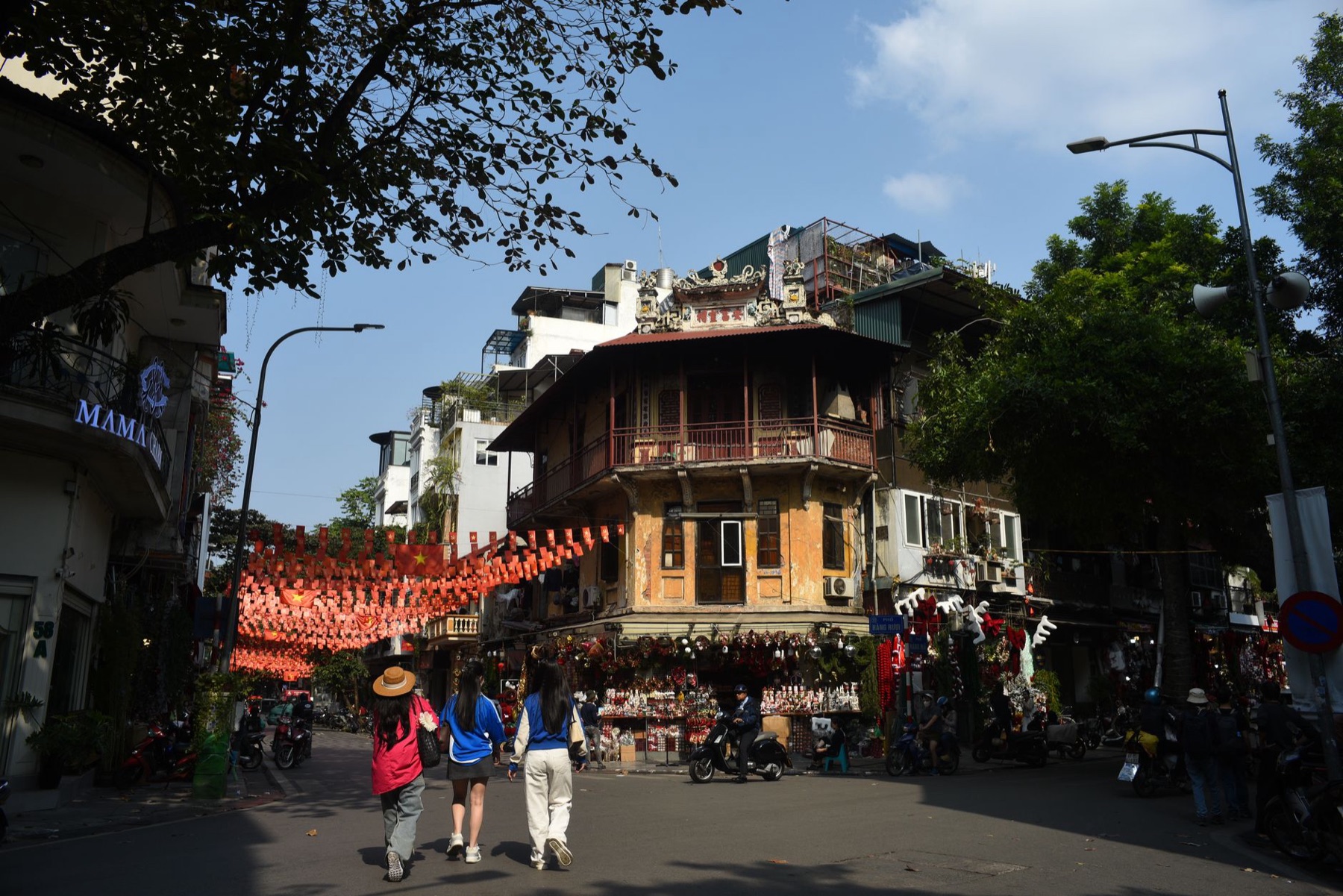
Hanoi feels overwhelming until you accept it's a walking city of neighborhoods, not a single "sight." Old Quarter (around Hang Dao, Hang Ngang streets) is loud, crowded and unmissable—puppet theater, morning egg coffee, chaotic charm—but don't stay there more than 2 nights if you want sleep. French Quarter (around Trang Tien, Ly Thai To) moves slower. One Pillar Pagoda and Temple of Literature are real but not worth half a day each alone; combine them with Hoan Kiem Lake loop (free, 30 minutes walk).
Eat pho at street stalls (around 30,000–50,000 VND / $1.20–2 USD), not tourist restaurants. Visit Hanoi's essential neighborhoods to map yourself. Take a photo in traditional ao dai—many travelers regret not doing this early; book an ao dai photoshoot in Hanoi through Cáo Studio so you're dressed for the memory, not rushed between temples.
Day-trip option: Tay Ho District for West Lake sunset walk, or Bat Trang pottery village (bus, around 45 minutes, 10,000–15,000 VND return). Skip: Mua Cave clone hikes near Hanoi—save your legs for Sapa.
📸 Book an ao dai photoshoot in Hanoi or Saigon (Cáo Studio)
Days 6–8: Ha Long Bay and Ninh Binh—limestone and kayaks
Ha Long is overbooked but genuinely worth 2 nights. The cave tours and sunset cruises are touristy (around $40–70 USD all-in), but the limestone seascape is unrepeatable. Budget cruises are crowded; midrange (around $80–120 USD, 3-star boat) is the honest sweet spot. Overnight beats day-trip because dawn kayaking in isolated grottos is where the magic happens.
Skip the "Titanic photo" pose at Titop Island—it's a line, not a view.
Ninh Binh comes next (bus from Ha Long via Hanoi, around 2–3 hours total, 50,000–80,000 VND / $2–3.20 USD). Hang Mua trek (2–3 hours up, steep) rewards you with rice valley views no filter improves. Trang An Boat Tour (around 200,000 VND / $8 USD, 3 hours) floats you through limestone tunnels—less crowded if you go before 9am. Stay overnight in Ninh Binh town (guesthouses 150,000–300,000 VND / $6–12 USD).
Keepsake angle: Ninh Binh limestone is porous; local artisans carve small stone lanterns or natural-edge boxes. These make honest souvenirs (unique, local, lightweight). Browse our home & stone collections for similar keepsake styles you can research locally.
Days 9–12: Sapa—mountains, minority villages, scrambled ethics
Sapa is beautiful, but its touristy reputation is earned. The 1,600m peak itself is often fogged; skip it unless weather is clear. Instead, trek into nearby villages (Cat Cat, Ta Phin, Sin Chai) for rice terraces and Hmong/Yao family homestays. Guides are essential here—solo trekking in remote areas creates safety and cultural friction. Hire through your guesthouse (around 300,000–500,000 VND / $12–20 USD per day, includes guide + homestay meals). Budget guesthouses run 100,000–200,000 VND ($4–8 USD); they're clean enough.
Honest truth: Sapa is where many trekkers feel the weight of "tourism impact." Homestays have been commercialized. Kids ask for money or pens instead of conversation. This isn't your fault, but it's real. If you stay 2 nights and trek only once (not every morning), you'll see less-tramped paths and feel less guilt.
Travel time: Hanoi to Sapa is 5–6 hours by minibus (180,000–250,000 VND / $7–10 USD) or overnight train (cheaper, slower, fun if you like sleeper trains). We lean toward minibus; your call.
For Sapa's full guide, trails and timing, read our regional breakdown.
Days 13–19: South—Hoi An, Da Nang, coastal breathing room
Flights Hanoi–Da Nang (2 hours, around $25–45 USD with budget carriers) or Hanoi–Ho Chi Minh City (2 hours, similar price) beat any bus for time-sanity. Book 3–4 days before; prices spike last-minute.
Hoi An (south of Da Nang, 1 hour bus, 15,000–20,000 VND / $0.60–0.80 USD) is a real ancient town—French-Vietnamese colonial architecture, lantern riverside—but it's also a souvenir gauntlet. Stay in the Old Town core (around Tran Phu, Nguyen Thai Hoc streets) 2 nights max. Tailor shops offer custom clothing in 2–3 days (around 300,000–800,000 VND / $12–32 USD for simple dresses or shirts); quality varies wildly—inspect seams in daylight.
Day-trip to Marble Mountains (Da Nang, 45 minutes south) for cave temples and sea views, or My Khe Beach to actually swim. Skip: the "Hoi An cooking class" as sold on Airbnb—it's mostly a motorbike tour plus basic knife work. Hoi An's guide covers timing and what's genuine.
Ho Chi Minh City (for remaining days) feels like a different country—faster, denser, hotter. District 1 (downtown, Nguyen Hue area) is walkable; Bitexco, War Remnants Museum and Reunification Palace are heavy history—plan emotionally, not just time. Eat at Ben Thanh Market or smaller pho shops in Districts 3–4 (cheaper, more local, excellent). Stay in District 3 or Binh Thanh for calm and authenticity.
See Ho Chi Minh City's full guide for neighborhoods, scams and food.
Logistics that save you days and money
| Decision | Cheap ($) | Comfort | Reality check |
|---|---|---|---|
| Flight vs. bus | Minibus: $5–15 | Domestic flight: $25–50 | Flight is faster; bus saves money but eats 6–10 hours each leg |
| Accommodation | Dorm: $3–6/night | 3-star hotel: $30–60 | Dorms are social; hotels offer peace; guesthouses ($10–20) split difference |
| Food daily | Street + markets: $5–8 | Sit-down restaurant: $8–15 | Street food is better; restaurants cater to tourists at 2× price |
| SIM vs. eSIM | Local SIM: $5 one-time | eSIM (no stop needed) | eSIM: cleaner; local SIM: better data plans |
| Tour vs. solo | Self-guided, maps: free | Group tour: $30–60/day | Solo is cheaper; tours save decision-making on day 1 |
eSIM + Visa logistics you need now
You'll need data for maps, translation and emergencies. A Vietnam eSIM (around $8–15 USD for 7–10 days) installs before you land; no shop line, no SIM-swap hassles. Alternatively, buy a local Viettel or Vinaphone SIM at Hanoi airport (50,000 VND starter + data packs).
Vietnam e-visa (3-month single entry, around $25 USD online) is worth the slight extra cost over airport visa runs—less friction, printable, recognized everywhere.
What to pack home (and what sticks)
You'll leave Vietnam with photos, exhaustion and regret about one meal you missed. Smart travelers pack keepsakes that don't weigh 5kg:
- Lacquerware coasters or small boxes from Hanoi's Hang Gai street (50,000–200,000 VND / $2–8 USD, lightweight)
- Silk scarves or fabric from Hoi An tailors (choose existing patterns, not custom—custom never ships home well)
- Coffee beans or tea from local markets (authentic, small, giftable)
- Printed maps or illustration art (ours from Hanoi Studio outlets or night markets, 20,000–80,000 VND / $0.80–3.20 USD)
Explore our art, gifts & keepsakes collections for frame-ready prints or curated souvenirs you can plan ahead.
🎟️ Compare tours & tickets for this place
What to check before you go
- Visa: Apply 2 weeks ahead; don't risk landing without it.
- Flights: Book Hanoi→South once your Sapa dates firm up; prices jump Friday–Sunday.
- Monsoon: May–September is wet in the north; November–April is dry and best. Plan layers and quick-dry clothes.
- Budget buffer: Add 20% to any estimate for food, transport and "just once" experiences. Vietnam is cheap, but small overspends compound.
- SIM or data: Have data before the airport exit. Download offline maps (Google Maps, Maps.me).
- Accommodation: Book nights 1–3 and your furthest endpoint; middle days can stay flexible for rhythm.
---
FAQ
Can I do 3 weeks Hanoi-based without flying south?
Yes, if you skip Ho Chi Minh City. Add a second Sapa trip, spend 3 nights in Ninh Binh for kayaking + biking, and explore Ma Pi Dung waterfall or northern beaches (Cat Ba Island). You'll get depth instead of breadth—many travelers prefer it.
What's the real cost of 3 weeks?
Budget $1,200–1,800 USD if you minimize flights, eat street food and use basic guesthouses; $2,500–3,500 USD if you fly between regions, stay midrange and do paid tours. Flights cost you $100–200 USD roundtrip depending on booking timing and carrier.
Is Sapa worth 4 days or 3?
Three nights (2 full days) is ideal. One trekking day, one recovery/village walk day, one travel day. Four days works only if weather forces cancel and you wait for clear views. Most travelers overestimate how much walking their bodies actually want mid-trip.
Which month avoids rain and crowds?
October and November: dry, clear, comfortable 20–25°C, and post-summer-break lull. December–February is also dry but busier and cooler (especially Sapa). March–April is hot but still dry.
Should I book tours or go solo?
Solo is cheaper and more flexible; group tours handle logistics and give you friends. Mix: self-guide Hanoi and Hoi An, book a 3-day Sapa trek with a guide, fly independently between regions. Sapa needs a guide; elsewhere, it's optional.
FAQ
Can I do 3 weeks Hanoi-based without flying south?
Yes, if you skip Ho Chi Minh City. Add a second Sapa trip, spend 3 nights in Ninh Binh for kayaking + biking, and explore Ma Pi Dung waterfall or northern beaches (Cat Ba Island). You'll get depth instead of breadth—many travelers prefer it.
What's the real cost of 3 weeks?
Budget $1,200–1,800 USD if you minimize flights, eat street food and use basic guesthouses; $2,500–3,500 USD if you fly between regions, stay midrange and do paid tours. Flights cost you $100–200 USD roundtrip depending on booking timing and carrier.
Is Sapa worth 4 days or 3?
Three nights (2 full days) is ideal. One trekking day, one recovery/village walk day, one travel day. Four days works only if weather forces cancel and you wait for clear views. Most travelers overestimate how much walking their bodies actually want mid-trip.
Which month avoids rain and crowds?
October and November: dry, clear, comfortable 20–25°C, and post-summer-break lull. December–February is also dry but busier and cooler (especially Sapa). March–April is hot but still dry.
Should I book tours or go solo?
Solo is cheaper and more flexible; group tours handle logistics and give you friends. Mix: self-guide Hanoi and Hoi An, book a 3-day Sapa trek with a guide, fly independently between regions. Sapa needs a guide; elsewhere, it's optional.