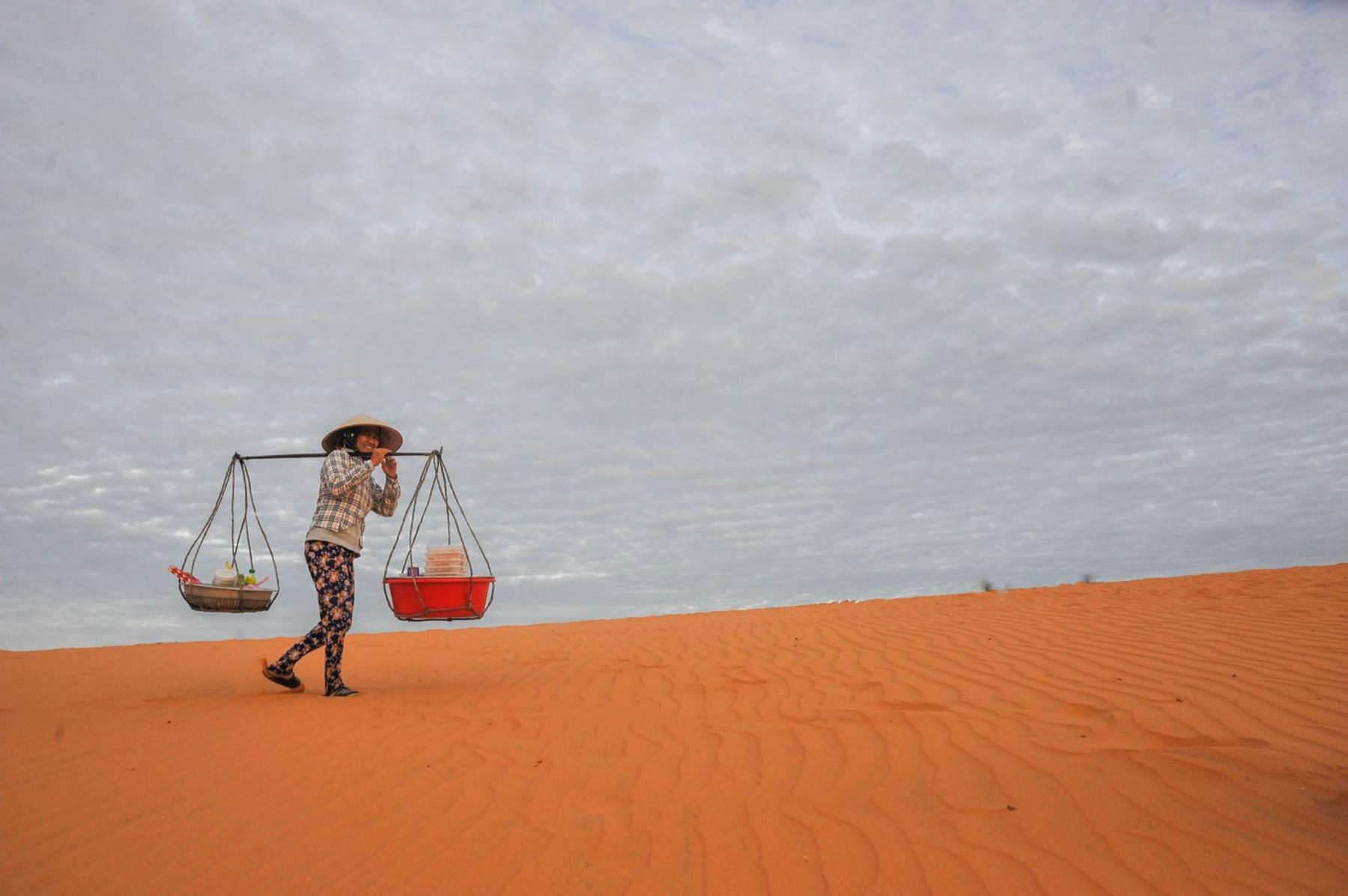
Mui Ne's food culture lives or dies by the catch. The small coastal town, 200 km east of Ho Chi Minh City, has no refined dining tradition—it's cash-and-carry markets, grilled protein over charcoal, and plastic chairs on sand. That's the appeal. If you eat here like a local—early, hungry, asking what just arrived—you'll spend less, taste better, and understand why so many Vietnamese families return year after year.
We've spent time in the harbour at 5 a.m., bought lunch from market vendors, eaten at beachside stalls, and tried the few sit-down spots worth your time. Here's what works and what doesn't.
---
Tại sao chợ cá buổi sáng tốt hơn nhà hàng?(Why is the morning fish market better than restaurants?)
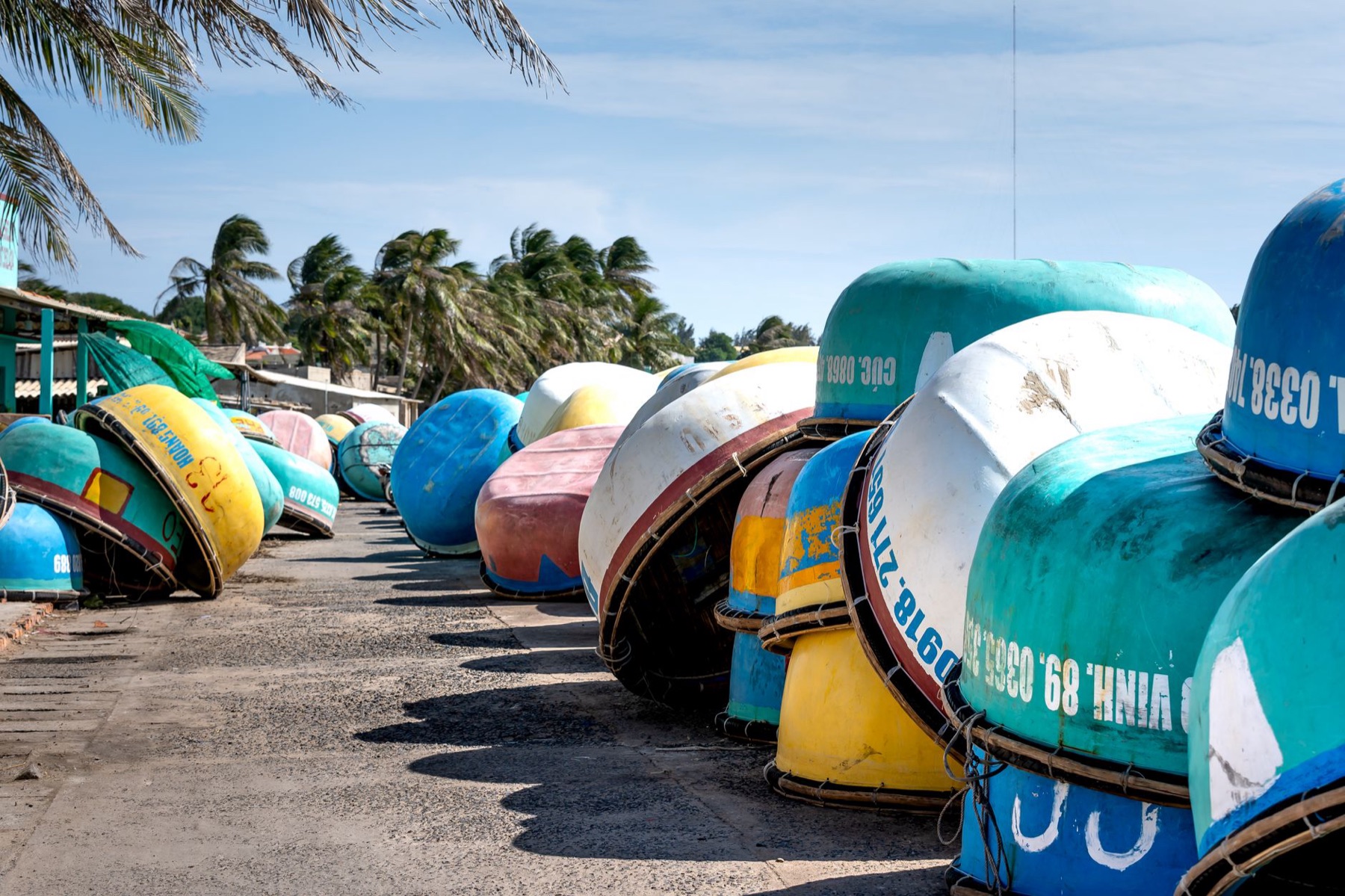
The Mui Ne fishing harbour opens around 4–5 a.m. Boats unload squid, crab, shrimp, grouper, and mackerel directly onto ice. By 7 a.m., vendors arrange them on plastic trays at the market stalls near the waterfront. Prices here are 20–40% lower than restaurants because there's no markup—you buy raw, take it to a stall operator who grills it for a small fee (usually 5,000–10,000 VND / ~USD $0.20–0.40), or eat it already-cooked for a medium markup.
Fish that sat in a restaurant fridge last night is never as sweet as fish that was swimming yesterday afternoon. The market stays cold; the profit motive stays honest. A 500g grilled whole fish costs around 80,000 VND (~USD $3.20) at the market versus 200,000–250,000 VND (~USD $8–10) at a beachfront restaurant serving the same fish on a ceramic plate.
---
ควรกินอะไรในตลาดเช้า?(What should you actually order at the morning market?)
Start with live shrimp (tôm sú). Point at the bucket; they weigh it. Around 150,000–200,000 VND per kilo (~USD $6–8); a meal portion is 300–400g. Ask for grilled (nướng) over charcoal. Add squid (mực) at 120,000–150,000 VND per kilo; a fat squid feeds two. Skip the small fish—vendors sell them cheap but they're bony and thin-fleshed. Larger grouper (cá mero) and mackerel (cá thu) are safer: firmer, fewer bones, around 100,000–130,000 VND per kilo.
Buy a bag of mixed herbs (dill, mint, cilantro, lime leaves) from the vegetable stand—costs around 5,000 VND (~USD $0.20)—and sit at the market's communal plastic tables. Pair grilled fish with rice from the stall vendor (around 10,000 VND / ~USD $0.40 per container) and a cold beer (around 15,000–20,000 VND / ~USD $0.60–0.80). Total for a full meal: 120,000–180,000 VND (~USD $5–7) per person. This is real eating.
---
Những nhà hàng bãi biển nào không lừa dối?(Which beachfront restaurants don't overcharge?)
Most beachfront sit-downs—the ones with sunset views and English menus—add 100–150% to wholesale cost. But a few near Phan Thiết (the town's centre, about 10 km west) keep prices honest because locals eat there. Look for busy family-run places in District 11 (Phường 11), Phan Thiết, not the "resort corridor" along the beach. A grilled fish here still costs 120,000–160,000 VND (~USD $5–6.50) for a solo diner; squid runs 100,000–140,000 VND (~USD $4–5.50).
Order the catch of the day (cá hôm nay), never a set menu. Ask price per kilo, not per plate. Request simple grilling (nướng muối = salt and charcoal) rather than "special sauces." Avoid places with printed colour menus at beachside; they're hunting tourists. A good sign: the waiter hoses down tables and talks to neighbours. A bad sign: someone hands you a laminated list before you've sat down.
---
Street food tại Mui Ne: Cái gì thực sự tốt?(What street food in Mui Ne is actually worth eating?)
Bánh mì (Vietnamese pâté sandwiches) sold from pushcarts near the market, early morning: around 20,000–30,000 VND (~USD $0.80–1.20). Fresh, crispy, the baguette is often 24 hours old, which is perfect here. Avoid pre-made ones sitting in a plastic case.
Bánh canh cua (crab cake soup) at small stalls near the market: around 25,000–40,000 VND (~USD $1–1.60). Thick, warm, filling at breakfast.
Nước mía (sugar-cane juice) pressed by hand in front of you: around 10,000 VND (~USD $0.40). Only drink it if the stand is visibly busy (high turnover = fresh).
Chè (cold sweet soup, made with coconut, tapioca, or red beans): around 15,000–25,000 VND (~USD $0.60–1) from pushcart vendors on the evening seafront. Ice quality varies—only buy from stalls with a full ice bucket and a long line.
Skip: dried squid sold as "snacks" near tourist stalls (marked up 300%), coconut drinks in sealed bottles (marketing over taste), and pre-grilled fish wrapped in plastic (oxidised, stale).
---
Nên mua hải sản sống ở đâu để nấu nướng tại phòng?(Where to buy live seafood to cook in your room?)
If your accommodation has a kitchen or can use one (hostels often allow this), the harbour market is essential. Arrive 6–7 a.m., buy what you want raw, carry it in a bag with ice (vendors provide), and cook it in 2–3 hours. Buy: live shrimp, squid, or crab. Avoid buying live fish unless you're expert at stunning it—messy, and locals prefer to buy already-killed.
The stall operator will gut and clean squid for free. Shrimp only need beheading (they do it). Crab should be bought pre-killed. Cost: 200,000–350,000 VND (~USD $8–14) for a 1-kg mixed haul that feeds 2–3 as a major protein. Many hostels in Mui Ne's north beach area have outdoor grills; ask the owner if you can use it. Cooking time: 8–10 minutes on charcoal, 4–5 minutes in a hot pan with salt, garlic, and lime.
---
Cách so sánh nhà hàng vs. chợ: Bảng quyết định(How to choose: Restaurant vs. Market Comparison)
| Tiêu chí | Chợ cá sáng | Nhà hàng bãi biển | Quán ăn Phan Thiết |
|---|---|---|---|
| Giá (1 suất chính) | 80,000–150,000 VND | 200,000–350,000 VND | 120,000–180,000 VND |
| Tươi sống | Cá sáng hôm nay | 12–24h cũ | Cá hôm qua / hôm nay |
| Thời gian chờ | 10–15 phút | 20–40 phút | 10–20 phút |
| Bầu không khí | Địa phương, ồn ào | Yên tĩnh, view | Gia đình Việt |
| Ngôn ngữ | Tiếng Việt only | Tiếng Anh, menu | Hỗn hợp |
| Lừa dối rủi ro | Thấp (giá trước mua) | Cao (upcharge) | Thấp (kiểm tra giá) |
| Lý tưởng cho | Người địa phương, tiết kiệm | Lấy hình Instagram | Cơm trưa thực thụ |
---
Scams to spot and how to avoid them(Những trò lừa cần tránh)
Upcharge on weight. Some restaurants weigh seafood raw but charge you the cooked weight (which is 25–30% lighter due to water loss). Always ask: "Is this price raw or cooked?" (Giá này là thịt tươi hay nấu rồi?). At the market, they weigh right in front of you—transparent, final.
"Fresh" fish that isn't. If a fish's eye is cloudy or sunken, it's 2+ days old. Gills should be bright red or pink, not brown. Ask when the boat arrived (Tàu này về lúc mấy giờ?). If they dodge the question, walk.
Substitute species. You order grouper; you get cheaper mackerel with the same shape. The market's repetition and word-of-mouth mean this rarely happens. Restaurants? Ask to see the fish whole before ordering—point at the actual specimen.
Overpriced "Western" food. If you see a Western breakfast menu (pancakes, smoothie bowls) at a beachside café, assume 3–4x markup. A simple fried egg should be 30,000–50,000 VND (~USD $1.20–2), not 120,000 (~USD $5).
Fake ice. Street beverages or ice in cheap stalls may use tap water. Only buy from stalls where you see them scooping from a bulk ice bucket visibly full and in heavy use.
---
Checklist trước khi mua hải sản(Check Before You Buy: Seafood Checklist)
- [ ] Ask the price first, in writing if needed. (Bao nhiêu tiền một ký? = How much per kilo?) Note it down on your phone.
- [ ] Check the fish's eye. Clear and shiny = fresh. Cloudy or flat = old.
- [ ] Smell it. Fresh seafood smells like ocean and salt, not ammonia or funk.
- [ ] Watch the weigh. Scale should show zero before placing the fish. You read the final number.
- [ ] Ask how long it's been cooked (if already grilled). Less than 30 minutes is ideal.
- [ ] Bring a plastic bag. If buying raw, ask the vendor to pack it with ice.
- [ ] Bring cash in small bills. Markets don't give change easily for large notes; bring 500,000 VND in mixed denominations (50k, 20k, 10k notes).
- [ ] Go early (before 8 a.m.). Selection dwindles fast; prices creep up as foot traffic drops.
- [ ] Eat immediately or within 2 hours. Raw seafood in heat spoils quickly.
---
Khác biệt: Các khu vực khác nhau có ăn khác không?(Does the food differ by area in Mui Ne?)
Mui Ne is small—only 20 km along the coast—but there are subtle differences. Near the harbour (Bình Sơn area): raw and grilled fish dominates; few restaurants; very cheap. Phan Thiết town centre (11 km west): more sit-down places, mixed local and tourist clientele, moderate prices. North beach resorts (Mũi Né proper, where most tourists stay): overpriced; avoid eating in your resort unless breakfast is included. Cà Tro, the fishing village further east: nearly all seafood stalls, no tourist English, prices even lower (locals only) but intimidating if you don't speak Vietnamese.
The honest move: eat near the harbour 6–8 a.m., then explore Phan Thiết's interior streets (around Trần Hưng Đạo street) for lunch at family-run places. Resort dining is a last resort.
---
📸 จองถ่ายรูปชุดอ๋าวหญ่ายที่ฮานอยหรือไซ่ง่อน (Cáo Studio)
---
Khi nào gọi một tour ăn uống hay tự khám phá?(Guided food tour vs. solo eating—which is right for you?)
Book a food tour if:
- You arrive without Vietnamese-language basics.
- You don't want to navigate the market alone at dawn.
- You want translation and cultural context (worthwhile, not just translation).
- You're traveling solo and want company.
- Cost: typically 600,000–1,000,000 VND (~USD $24–40) per person for 3–4 hours. You'll eat 3–4 stops; a solo tour would cost 200,000–250,000 VND (~USD $8–10) in food.
Eat solo if:
- You have a guide/phrasebook (or Google Translate on your phone).
- You like the challenge and adventure.
- You want to eat whatever, whenever, without a schedule.
- You prefer spending money on food, not on a tour guide.
Our take: learn five Vietnamese words (cá = fish, tôm = shrimp, mặn = salty, tươi = fresh, bao nhiêu tiền = how much money?), bring cash, and dive in. The experience beats a tour.
---
---
Eating in Mui Ne is straightforward if you follow one rule: eat where locals eat, ask the price, and verify freshness yourself. The harbour market is non-negotiable if you want value and truth. Restaurants have their place—sunsets, lazy lunches—but they're a luxury tax on the same fish. Spend your money on fresh shrimp and a cold beer at a plastic table, watching boats unload the next day's catch. That's Mui Ne.
For broader Vietnamese travel context, explore our Vietnam itinerary planner. For other coastal regions, check Ha Long Bay and Ninh Binh guides. If you're combining this trip with Ho Chi Minh City or Hanoi, those hubs have different food cultures worth experiencing. And if you want to capture your coastal trip professionally, Cáo Studio offers beachside photoshoots and áo dài portraits.
---
---
FAQ
ควรไปตลาดปลาเมื่อไหร่เพื่อให้ได้เลือกสินค้าที่ดีที่สุด?
ตลาดเปิด 4–5 น. เรือประมงเข้าท่า 5–6 น. คุณควรไประหว่าง 6–8 น. เพื่อได้ปลาที่ดีที่สุด ราคาต่ำสุด และไม่มีฝูงชนท่องเที่ยว หลังจาก 9 น. เลือก เสื่อม และราคาสูงขึ้น
ความแตกต่างระหว่างกุ้งสดและกุ้งแช่แข็งคืออะไร?
กุ้งสด (ตั้งแต่เช้า) มีเนื้อเสียบ และรสชาติหวาน ตาสว่าง เหงือกสีแดง เบ้าแข็ง กุ้งแช่แข็งหรือ 1–2 วันเก่า มีเนื้อไม่ดี รสชาติอ่อน เสียบไม่ดี ที่บาง ฝั่งหนี ป้องกัน ที่ตลาด คุณเลือกเอง ที่ร้านอาหาร คุณอาจได้ที่เก่า
ฉันควรสั่งอาหารอะไรถ้าฉันไม่รู้ชื่อปลา?
ชี้ไปที่สิ่งที่ดูเหมือนจะดีที่สุด (ตาสว่าง เหงือกสีแดง) และพูด "Cá này, nướng muối" (ปลานี้ เกลือย่าง) ตัวแทนจะจัดการ หลีกเลี่ยงปลาเล็กน้อย—กระดูกมาก เลือกปลาที่มีขนาด A4 หรือใหญ่กว่า—ขนาดอาหาร มีเนื้อมากขึ้น
ราคาสำหรับอาหารเช้าที่ตลาดคืออะไร?
ปลาเต็มตัว (500 ก.) ประมาณ 80,000–120,000 VND (~USD $3.20–4.80) กุ้ง (300–400 ก.) ประมาณ 80,000–120,000 VND (~USD $3.20–4.80) ข้าวและเครื่องปรุง ประมาณ 10,000–15,000 VND (~USD $0.40–0.60) เบียร์ประมาณ 15,000–20,000 VND (~USD $0.60–0.80) รวมสำหรับ 1 คน: ประมาณ 120,000–180,000 VND (~USD $5–7)
ปลอดภัยหรือไม่ที่จะเชื่อไทยหรืออังกฤษเนื้อที่ร้านปลา?
ไม่ เสมอมา หลีกเลี่ยงการสั่ง "ปลามาตรฐาน" หรือ "เชือก" ชี้ไปที่ปลาทั้งตัวด้วยตัวเอง ถามชื่อเวียดนาม (Cá gì vậy?) และราคาต่อกิโลกรัม เขียนขึ้นมา ผู้ขายตั้งตารับ หากพวกเขาลังเล ให้ไป
ฉันควรรักษาเก็บปลาสดเป็นเวลานานเท่าไหร่หลังจากกลับจากตลาด?
ไม่มากกว่า 2–3 ชั่วโมงในอากาศร้อน โดยเฉพาะปลาสด เก็บในถุงพลาสติก กับน้ำแข็ง ถ้าคุณไม่สามารถอบรม 2 ชั่วโมง ซื้อเนื้อสุกแล้ว (nướng rồi) แทน ===END OF RESPONSE===